Serving Watsonville, CA and surrounding areas. (831) 666-1547
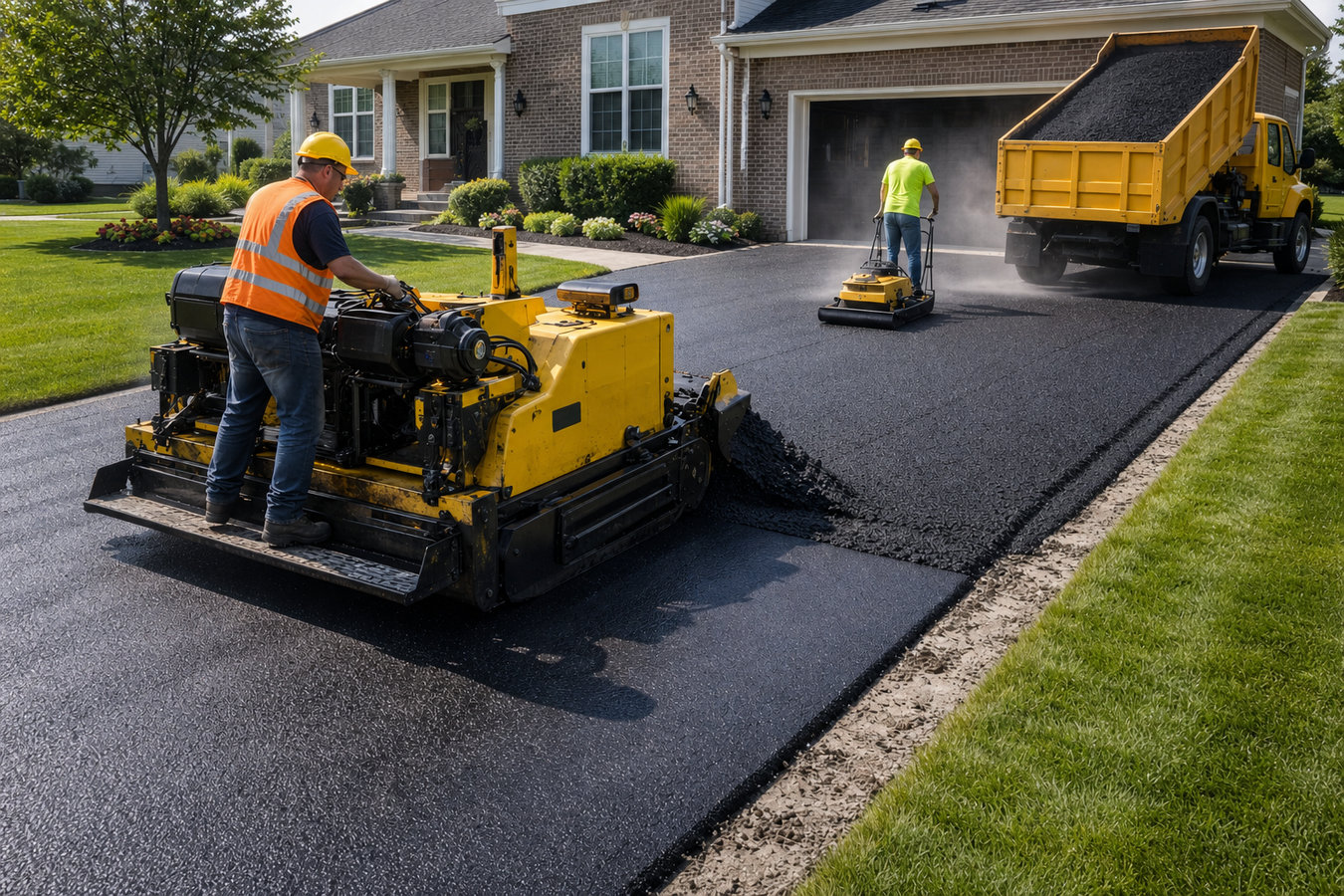
Watsonville Asphalt Paving installs and repairs asphalt driveways, resurfaces parking lots, and solves drainage problems for Live Oak properties - accounting for the Sacramento Valley clay soils and seasonal heat that wear on paved surfaces faster than most homeowners expect, with free estimates and replies within one business day.
Most residential lots in Live Oak are flat, which simplifies drainage design, but the clay-heavy Sacramento Valley soils create a base stability challenge that requires proper compaction and base depth to address. Our driveway paving work in Live Oak accounts for soil conditions before asphalt goes down, so the finished surface does not crack and heave through the first dry season.
Many homes in Live Oak were built in the 1950s through 1980s, and driveways from that era have been through decades of summer heat cycles that dry out and oxidize the surface. Resurfacing lays a fresh asphalt layer over a structurally sound base, restoring water-shedding ability and extending the useful life of the driveway without the cost of full demolition and replacement.
Live Oak summers regularly push above 95 degrees for weeks at a time, and that prolonged heat is hard on unprotected asphalt binder. Sealcoating reflects UV radiation and seals the surface against the oxidation that makes asphalt brittle and prone to cracking. Applied on a 3-to-5-year cycle, it is the most cost-effective maintenance step available for any driveway or parking lot in this climate.
Clay soils in the Sacramento Valley shrink during summer drought and swell back up when winter rain arrives. That movement opens cracks in asphalt from below each year. Sealing those cracks before the wet season starts keeps winter rain out of the base, preventing the wash-out and soft spots that follow once water gets underneath the pavement.
Live Oak sits in the flat Sacramento Valley, and flat terrain means water does not move away from driveways and foundations quickly after rain. Properties in lower parts of town near the Feather River corridor can see standing water after heavy rain events. Catch basins, channel drains, and proper lot grading redirect water before it sits against pavement and softens the base.
Potholes in Live Oak often trace back to clay soil movement weakening the base during seasonal wet-dry cycles. Once the base material loses density, the asphalt above it collapses under traffic load. Repairing potholes promptly - before water enters the cavity and widens the base damage through the next wet season - keeps repair costs manageable.
Live Oak sits in the Sacramento Valley, and the two forces that drive pavement deterioration here are heat and clay soil movement - and they work against each other in a cycle that repeats every year. Summer temperatures regularly exceed 95 degrees and sometimes top 100, and that sustained heat dries out the asphalt binder faster than in coastal or foothill climates. By late summer, driveways that have not been maintained with regular sealcoating are often visibly gray, brittle, and starting to show surface cracking. The clay soils common throughout this part of Sutter County compound the problem: they shrink as they dry, pulling away from the base material and creating voids beneath the asphalt that allow the surface to crack and flex under vehicle weight.
Winter brings the second half of the cycle. Sacramento Valley winters deliver steady rainfall concentrated between November and March, and those same clay soils absorb water quickly, swelling back to their wet-season volume. That expansion pushes upward against pavement from below, widening the cracks that opened during summer and creating new ones. Properties in the lower-lying parts of Live Oak near drainage channels and the Feather River floodplain see standing water during heavier rain events, which adds surface moisture to a base that is already stressed from below. A contractor unfamiliar with this cycle will treat individual symptoms - a pothole here, a crack there - rather than designing a surface and drainage system that accounts for the full seasonal pattern.
Our crew works throughout Live Oak regularly, and we understand the local conditions that affect asphalt paving work here. The city sits along Highway 99, the main north-south corridor through the Sacramento Valley, and most job sites we reach here come off that highway onto the residential streets running east and west. Live Oak Boulevard and the neighborhoods surrounding Live Oak City Hall form the core of the city, and the residential areas extend outward from that center with the flat grid typical of Sacramento Valley towns. Clay soil conditions are consistent throughout - we factor base depth and compaction specifications into every estimate here accordingly.
We also serve Santa Cruz, which is a different climate and terrain altogether - a coastal city with marine fog and salt air conditions in contrast to Live Oak's dry valley heat. If you have properties or contacts in both communities, we cover both. We work regularly in Capitola as well, a small coastal city between Santa Cruz and the Monterey Bay shoreline, giving our crew range from the Sacramento Valley to the Central Coast.
Call us directly or fill out the contact form with your address in Live Oak and a quick description of what you need. We reply within one business day to schedule a free on-site estimate.
We walk the property, evaluate the existing surface condition and base, check drainage, and look at soil conditions. You receive a written quote with line-item detail - no surprise costs. If your budget is a concern, we tell you what to prioritize first.
Our crew shows up on schedule with the right equipment for your site and conditions. For most residential jobs you do not need to be present, though we confirm the plan with you before the crew starts.
We clean up the site when the job is finished. For new asphalt or resurfacing work, we provide clear curing guidance - generally 24 to 48 hours before vehicle traffic - so the surface sets properly in the valley heat.
We cover all of Live Oak and know the clay soil and heat conditions that affect pavement here. Free estimates, written quotes, no pressure - reply within one business day.
(831) 666-1547Live Oak is a small city in northern Sutter County, positioned along Highway 99 between Yuba City to the south and Chico to the north. The city has around 9,000 to 10,000 residents and a working-class, family-oriented character rooted in the Sacramento Valley agricultural economy that surrounds it. Live Oak Boulevard runs through the center of the city past City Hall, and residential neighborhoods extend outward in the flat grid pattern typical of Sacramento Valley towns. Most of the housing stock was built between the 1950s and 1990s, with modest single-family homes on flat lots that reflect the practical, stable character of the community. The Sutter Buttes - often called the world's smallest mountain range - rise from the valley floor to the southwest and are visible from most parts of town.
The Feather River runs near Live Oak and has historically shaped the local landscape and flood management planning. Parts of the surrounding area sit in the Sacramento Valley floodplain, and the city participates in programs that help residents manage flood risk. Learn more through the City of Live Oak website. The region is far removed in character from the coastal communities to the west, but our service range extends to meet property owners here who need the same quality paving work available closer to the coast. For nearby work in the coastal area, we cover Santa Cruz and Capitola, connecting Live Oak customers to a crew that operates across a wide geography.
Durable concrete curbs and sidewalks that define and protect your property.
Learn MoreClay soils and Sacramento Valley heat are hard on asphalt - we know how to build for those conditions. Call now or request a free estimate and hear back within one business day.