Serving Watsonville, CA and surrounding areas. (831) 666-1547
Your driveway is cracked, gray, and worn - but the base underneath may still be solid. Resurfacing puts a new layer of hot-mix asphalt on top, restoring the look and function without tearing everything out.
Your driveway is cracked, gray, and worn - but the base underneath may still be solid. Resurfacing puts a new layer of hot-mix asphalt on top, restoring the look and function without tearing everything out.
Asphalt resurfacing in Watsonville means laying a fresh layer of hot-mix asphalt over your existing driveway or parking surface - the old surface stays in place and the new layer bonds on top, restoring a smooth, solid finish, with most residential driveways completed in a single day.
Resurfacing works best when the base beneath your existing pavement is still structurally sound but the top layer has worn out, cracked, or gone gray from oxidation. If the base has shifted or crumbled, a full replacement is usually the better call - and a reputable contractor will tell you honestly which situation you are in. When the surface damage is limited to localized spots rather than widespread cracking, combining resurfacing with pothole repair can address both in the same visit.
When a network of small cracks spreads across your driveway - sometimes called an alligator pattern - the top layer has reached the end of its useful life. In Watsonville, this often develops faster in areas where clay soil movement has flexed the surface repeatedly. Resurfacing while the base is still solid is far less expensive than waiting until the base fails too.
Low spots that collect standing water are a warning sign. Pajaro Valley winters mean water sits on a driveway longer than in drier climates, and standing water works its way into cracks and weakens the base. If you notice puddles forming in the same spots after every rain, the surface has lost its shape and drainage slope.
Fresh asphalt is dark and dense. As it oxidizes - accelerated by coastal UV and marine air - the surface turns light gray and becomes rough and porous. A faded surface is more vulnerable to water intrusion and harder on foot traffic. Resurfacing restores both the appearance and the protective function of the top layer.
Edge cracking starts where the driveway meets lawn or soil. In clay-heavy areas like much of the Pajaro Valley, seasonal wet-dry cycles cause soil at the edges to expand and contract, pulling the asphalt apart. Catching this before the edges crumble is when resurfacing is still the practical fix - not a full replacement.
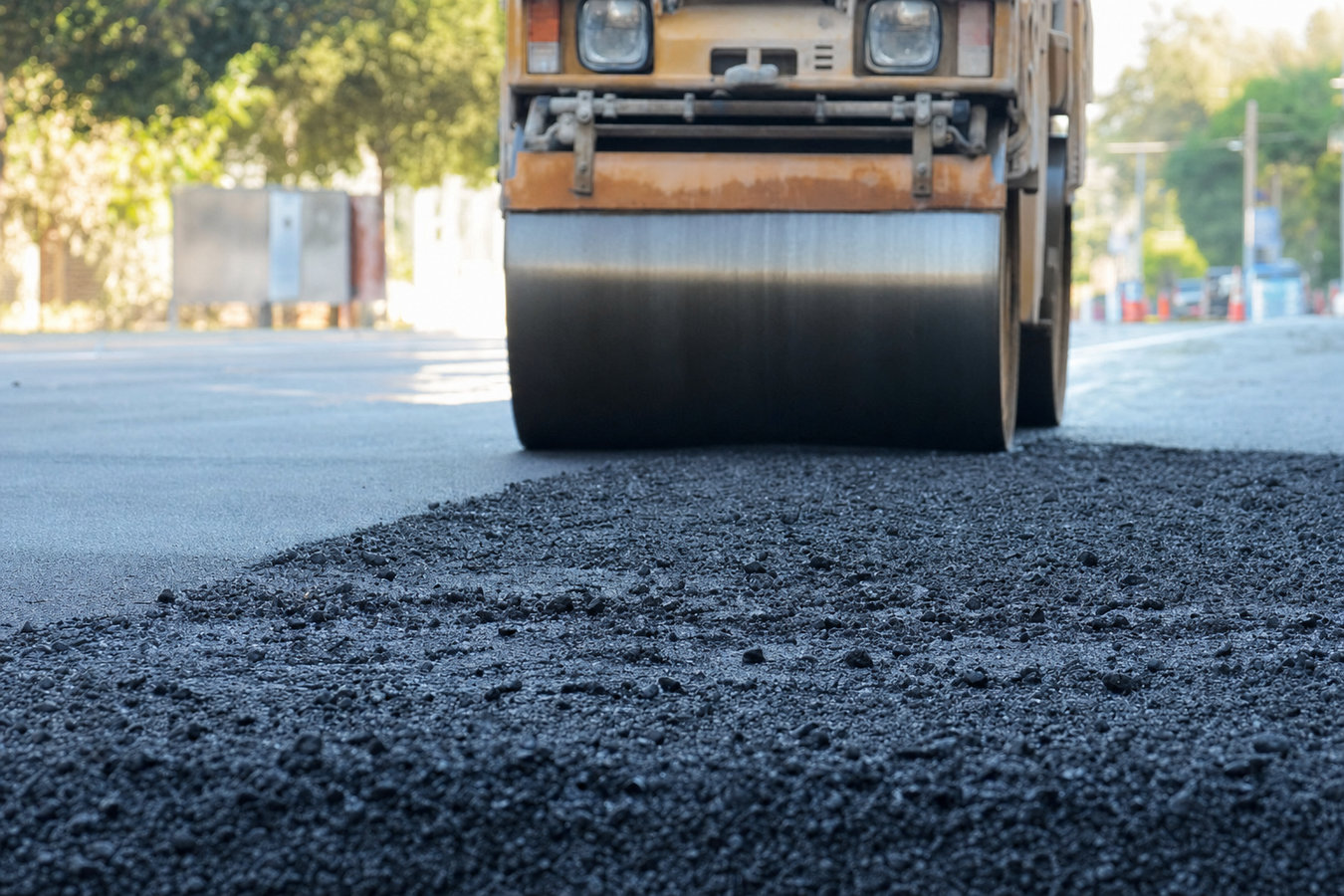
Every resurfacing job starts with thorough surface preparation - the step that determines how long the new layer lasts. The crew cleans the existing surface, fills significant cracks and low spots, and applies a tack coat - a thin, sticky bonding layer - before the new asphalt goes down. A paving machine lays the hot-mix at the specified thickness, a roller compacts it while it is still warm, and the crew cleans up before leaving. When preparation before the new layer reveals milling needs, we can pair resurfacing with asphalt milling to remove the worn surface first and achieve a more uniform base.
A standard residential resurfacing layer is typically around 1.5 to 2 inches of compacted asphalt. Thinner applications save money upfront but wear faster - we recommend the right thickness for your traffic load and existing surface condition. Most contractors, including us, recommend waiting six months to a year before applying sealcoat on a freshly resurfaced surface, so the asphalt can fully cure first. If you want a complete surface protection plan from day one, pothole repair and edge corrections can be handled in the same visit as the resurfacing.
Best for homeowners whose driveway base is intact but the top layer has cracked, faded, or worn beyond repair.
Suited for small commercial lots where the surface has deteriorated but the subbase is still structurally sound.
Right when the existing surface needs to be ground down first to achieve a level, well-bonded base for the new layer.
For driveways with crumbling edges or an apron where the surface meets the street that needs matching work.
Ideal when localized failures and widespread surface wear need to be addressed together in one visit.
For homeowners who want a maintenance schedule in place from the day the new surface is complete.
Watsonville sits in the Pajaro Valley on a mix of alluvial deposits and expansive clays that shift with changes in moisture - swelling in the wet season and contracting through the dry months. This movement is the dominant local concern for any paving job. Before laying a new surface, a contractor needs to check whether the existing base has been compromised by soil movement, because resurfacing over an unstable base will not hold. The Central Coast's wet season also narrows the practical scheduling window - asphalt cannot be laid in cold, rainy conditions, so most local work runs from late spring through early fall.
Watsonville's mild coastal climate is actually gentler on fresh asphalt than the extreme heat found inland - but the combination of salt-laden marine air, concentrated winter rainfall, and clay soil movement still creates conditions that age pavement faster here than in drier parts of California. Homeowners in Soquel and Aptos face the same coastal soil and weather combination, and we handle resurfacing projects throughout these communities. Keeping a new surface sealed and monitoring for early edge cracking extends the life of a resurfacing job significantly in this climate.
We walk your driveway, measure the area, and assess the condition of the existing surface and base. A written estimate spells out the scope of work, the materials, and the total price. You will hear back from us within one business day of reaching out.
For most residential driveways, no permit is needed. If work will touch the apron where your driveway meets the city street, we check with the relevant road authority and handle any approvals on your behalf. Before the crew arrives, you clear vehicles and anything else from the surface.
The crew cleans the existing surface, fills significant cracks and low spots, then applies a tack coat - the thin, sticky bonding layer that makes the new asphalt adhere tightly to the old one. This step is what separates a long-lasting job from one that peels within a season.
The paving machine lays hot-mix asphalt at the specified thickness and a roller compacts it while it is still warm. Most residential driveways in Watsonville are done in a single day. Vehicles stay off for at least 24 to 48 hours - your contractor will confirm the curing timeline based on the day's weather.
We walk your driveway in person, give you an honest assessment of whether resurfacing or replacement makes more sense, and put a clear written quote in your hands - no pressure.
(831) 666-1547We walk your driveway before quoting and tell you directly whether resurfacing makes sense or whether the base requires a full replacement. We do not recommend the more expensive option unless the condition of the base genuinely calls for it.
Clay soils in this area can compromise a base without the surface showing obvious signs. We check for base movement and soft spots before recommending a resurfacing approach, because laying new asphalt over a failing base is one of the most common reasons resurfacing fails early.
You can verify our state contractor license through the California Contractors State License Board before you commit to anything. We carry general liability insurance and workers' compensation on every job - a certificate of insurance is available on request.
Most residential driveways in Watsonville are completed in one day. The crew lays the asphalt, compacts it, and cleans up equipment and debris before leaving. You are back to normal life the next morning - no weeks of disruption, no torn-up yard.
A well-done resurfacing job on a sound base gives you a decade or more of reliable surface without the cost of a full replacement. We focus on the prep work that makes that outcome possible, not the shortcuts that look fine for the first season.
For driveways with localized failures that need patching before or alongside a full resurfacing job.
Learn MoreWhen the existing surface needs to be ground down before a new layer can bond properly, milling prepares the base.
Learn MoreSpots fill up fast before the rainy season - contact us now to lock in your date and get your driveway done while the dry weather holds.