Serving Watsonville, CA and surrounding areas. (831) 666-1547
Your lot is cracking and holding water after every storm - we install a properly graded, compacted surface that drains fast and holds up through Watsonville winters.
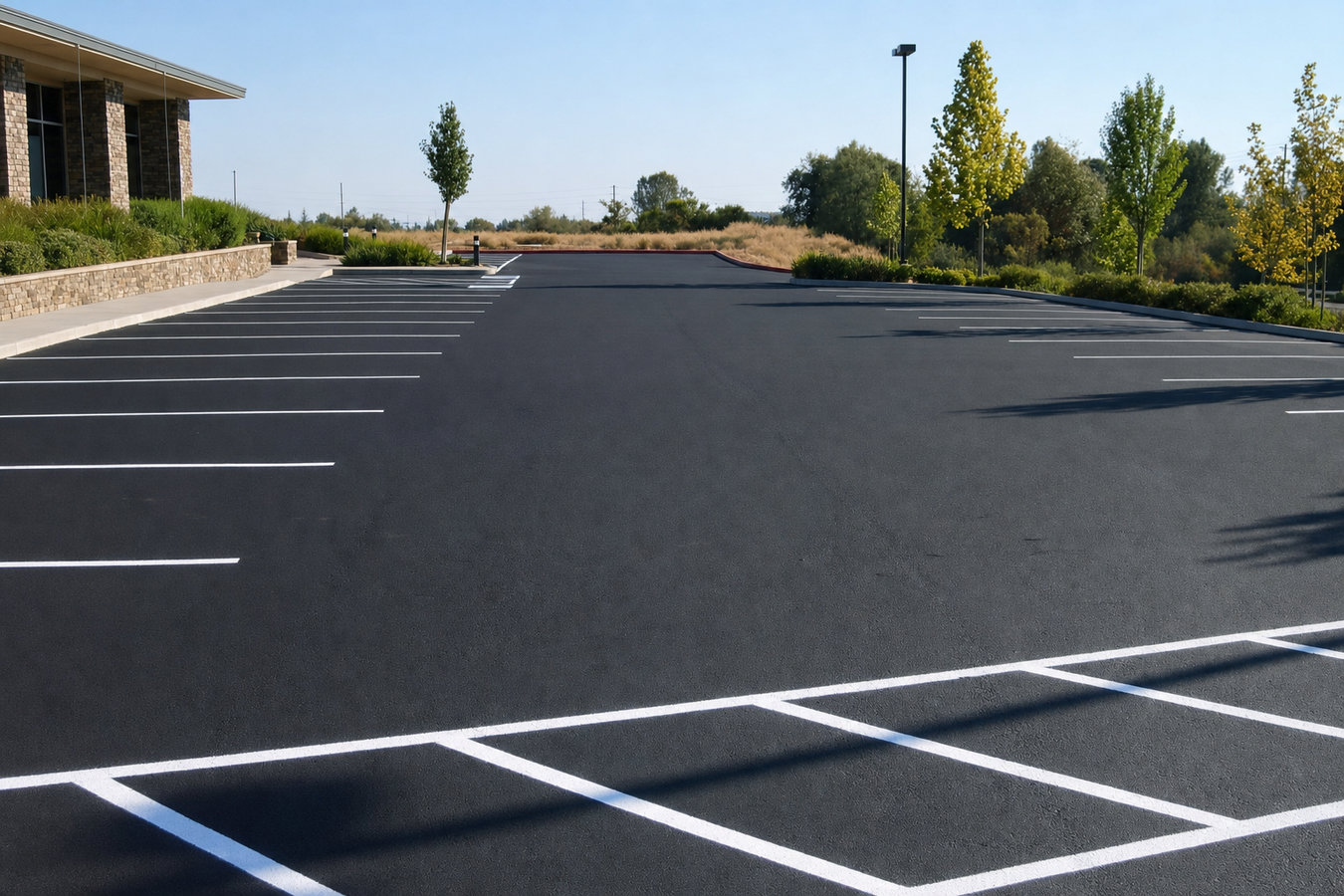
Parking lot paving in Watsonville, CA involves removing or preparing the existing surface, grading for drainage, laying hot-mix asphalt, and rolling it smooth while still warm - most small-to-medium lots are paved in one to three days, with base preparation taking the most time.
The part customers rarely see - the base preparation - is what determines whether the finished lot lasts five years or twenty. A lot that drains poorly, develops ruts quickly, or cracks within a few rainy seasons almost always traces back to a weak or poorly graded base, not a problem with the asphalt itself.
After the surface is paved and cured, the next step is markings. Our driveway paving and commercial asphalt paving services handle the full range of surface needs, from single-family driveways to large commercial installations.
When cracks spread in a web-like pattern across the surface - sometimes called alligator cracking - the asphalt has reached the point where patching alone will not hold. Each Watsonville rainy season pushes water into those cracks, weakening the base and accelerating the damage.
Low spots that hold water after rain mean the lot's drainage has failed. In a climate where rain arrives in concentrated bursts between November and March, pooling water speeds up surface deterioration and creates slip hazards for customers and employees.
Potholes and raised edges are not just an eyesore - they create a real risk of vehicle damage and trip hazards. If you are filling the same spots repeatedly, the base has failed in those areas and a full repave is more cost-effective than continued patching.
When stall lines, fire lane markings, and accessible spaces are barely visible, the lot looks run-down. Restriping helps temporarily, but if the surface underneath is rough or heavily patched, a fresh repave gives you a clean, even base for markings that will last.
We handle commercial parking lot paving from initial base assessment through finished striping. Every project starts with a walkthrough to measure the lot, check drainage, and evaluate the existing base - this is the only way to give a written quote that reflects actual scope and cost. For properties needing a full new surface, we remove or mill the existing asphalt, address any soft spots or drainage problems in the base, and lay fresh hot-mix asphalt to the required thickness. We coordinate striping as a follow-up step after the surface has cured, including accessible parking spaces built to meet California requirements. If your lot connects to a driveway paving or entrance area, we plan both surfaces together so grades match and water moves off the property consistently.
For larger commercial properties, we work alongside our commercial asphalt paving team to coordinate phased work that keeps part of the property accessible while the rest is being paved - an important consideration for businesses that cannot shut down operations during the project.
Best for lots with widespread cracking, base failure, or drainage problems that make continued patching uneconomical.
Right for undeveloped or gravel lots being converted to asphalt, with full base preparation and drainage design from the ground up.
Allows commercial properties that need to stay operational to close and repave the lot in sections rather than all at once.
Includes properly sized, sloped, and signed accessible parking spaces built to current California and federal requirements as part of the same project.
Watsonville's wet winters and coastal location create conditions that challenge poorly built parking lots year after year. The rainy season runs roughly from November through March, and concentrated rainfall tests drainage design every single year. A lot without proper slope and edge containment will develop soft spots and edge failures as water works into the base - and those failures compound over time. The clay soils common in the Pajaro Valley add another layer of challenge, expanding when wet and shrinking when dry in a cycle that can shift the base beneath the surface with each season.
We build drainage slope and base thickness to account for both factors - not a generic commercial standard, but one calibrated to the wet-winter, clay-soil conditions that Watsonville properties actually face. We serve commercial and multi-family property owners throughout the area, including Capitola, CA and Santa Cruz, CA, where the same coastal conditions apply.
Call or submit a form and we respond within one business day to schedule a site visit. Commercial paving quotes require walking the lot - no remote estimates.
We walk the lot, assess the base and drainage, measure the area, and deliver a written estimate that details base work, paving thickness, and striping - so you can compare it accurately against other bids.
The crew removes the old surface, addresses soft spots and drainage in the base, then paves and compacts the hot-mix asphalt. Plan for the lot to be closed to vehicles for at least 24 hours after paving.
The day after paving, the crew returns to paint all required markings - stalls, fire lanes, and accessible spaces. We then walk the finished lot with you and outline the sealcoat timeline for optimal long-term performance.
We walk every lot before quoting. No phone estimates - just a detailed written scope you can compare against other bids.
(831) 666-1547We account for the expansive clay soils common in the Watsonville area when sizing and compacting the base. A lot built to a generic commercial standard in this soil type often develops problems within a few wet seasons - one built with local conditions in mind holds up far longer.
California's requirements for accessible parking spaces cover dimensions, slope, signage, and path of travel to the building entrance. We design compliant spaces into the layout from the start, following guidelines from the ADA.gov - not as an afterthought.
Every job comes with a written contract that details the base preparation, asphalt thickness, striping plan, and any warranty on workmanship. You know exactly what you are paying for - and you have documentation if any questions come up after the job is done.
California requires paving contractors to hold a current state license for projects above a certain value. Check any contractor's license number on the CSLB website before signing anything - it takes two minutes and tells you whether the license is active.
A well-paved lot is a long-term asset. Getting the base, drainage, and accessibility right the first time is what separates a lot that performs for 20 years from one that needs costly attention every few seasons.
Residential driveway installations with the same base preparation and drainage grading standards applied to commercial lot work.
Learn MoreLarger-scale commercial surface installations for multi-building sites, industrial properties, and high-traffic areas.
Learn MoreDry-weather paving windows book quickly - call or request a free on-site estimate now to secure your spot on the schedule.