Serving Watsonville, CA and surrounding areas. (831) 666-1547
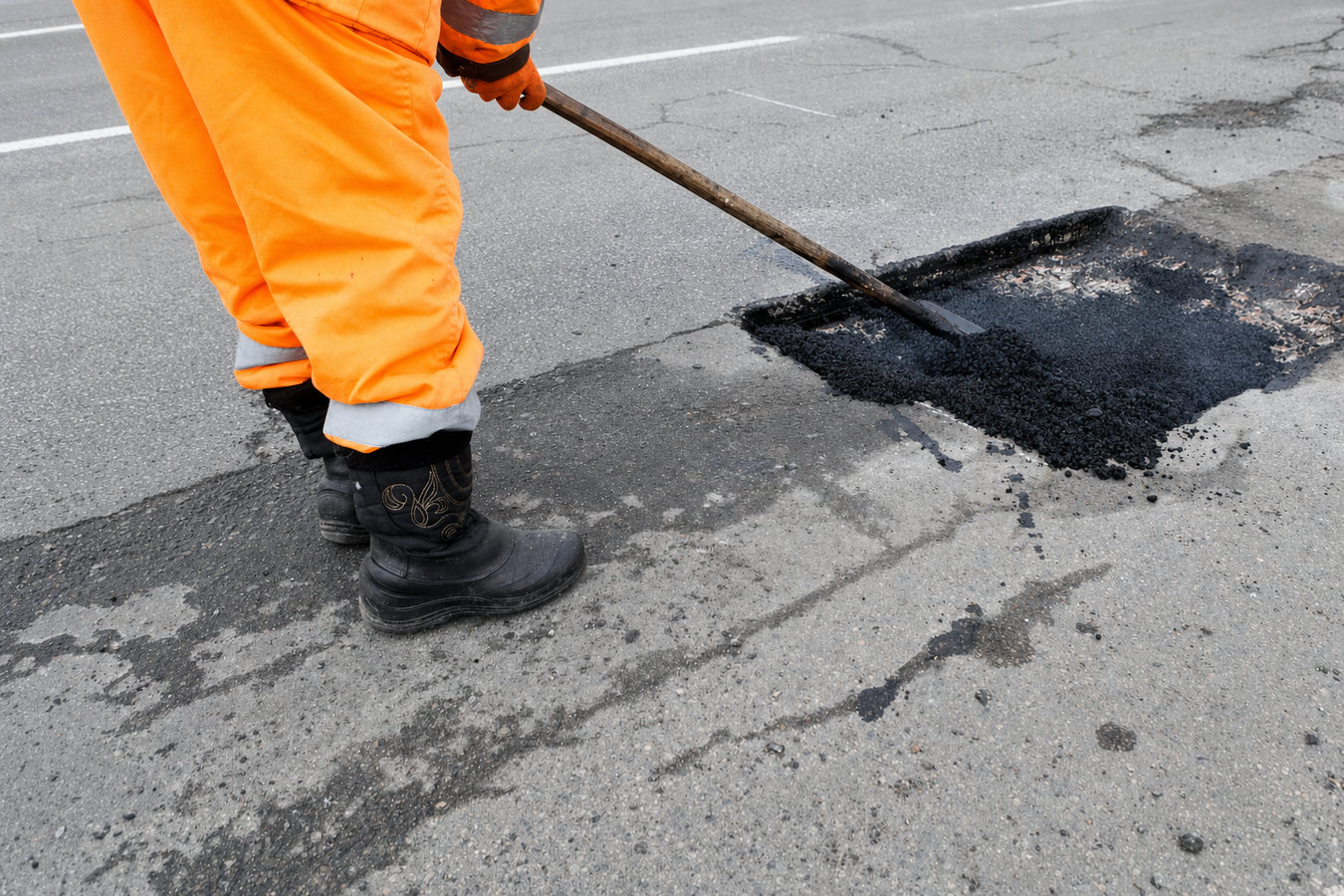
Every winter that passes with open cracks or soft spots pushes more water into the base. We repair the damage now - base and surface - so the rainy season does not make it worse.
Asphalt repair in Watsonville means cutting out or patching damaged sections of a driveway or private road, addressing the base if needed, and filling with fresh material compacted flush with the surrounding pavement - most residential repairs are completed in a single day.
The most common mistake in asphalt repair is treating only the surface when the real problem is underground. Watsonville sits on clay-rich Pajaro Valley soils that expand every winter and shrink every summer, and that movement is what drives cracks and soft spots upward. A good repair addresses what is happening beneath the asphalt, not just what you can see from the curb.
For damage that has spread across most of the surface, we will be straightforward with you about whether repair or a full asphalt crack sealing program - or a complete replacement - makes more sense for your situation. We do not patch surfaces that are going to need full replacement in a year.
If small cracks last fall are noticeably wider or longer now that the rainy season has passed, water has been working its way in. Watsonville's wet winters give water plenty of opportunity to enter cracks, soften the base, and widen the damage from below. Catching this before next winter prevents a small repair from becoming a large one.
A pothole or low spot is a sign that the base beneath has softened or shifted - common in the clay-heavy soils of the Pajaro Valley. These do not fill themselves, and every vehicle that hits one makes the damage worse. A depression that holds water after rain is especially urgent because standing water accelerates base failure.
Driveway edges are the most vulnerable part of any asphalt surface because they lack support on one side. Chunks breaking off along the sides, or a ragged crumbling line along the edge, will continue spreading inward without repair - and the longer it goes, the wider the repair area becomes.
A network of interconnected cracks that resembles a reptile's skin is a sign of base failure, not just surface wear. This cannot be fixed with crack filler - the affected section needs to be removed and rebuilt from below. The sooner it is addressed, the smaller the area that needs to come out.
We handle the full range of asphalt repair, from isolated pothole patching to larger sections where the base has failed and needs to be rebuilt before fresh asphalt goes down. Every repair starts with an honest assessment - we look at the surface damage, probe for soft spots, and determine whether the base underneath is still solid. If the base is compromised, we address that first rather than covering it over. For customers whose surfaces have widespread cracking that has not yet reached base failure, asphalt crack sealing is often the right first step, filling and sealing the cracks before water gets into the base and turns a maintenance item into a structural repair.
After a repair, we recommend protecting the new and surrounding asphalt with a sealcoat once the material has cured - typically several months later, timed to apply before the next rainy season. For driveways that are simply beyond repair, pothole repair on specific problem areas can be a holding measure while you plan a full replacement. We will tell you honestly which route makes sense for your property and your budget.
Suits surfaces with one or more isolated holes or low spots - we cut clean edges, prepare the base, and compact new material flush with the surrounding pavement.
Suits areas where alligator cracking or base failure covers a defined zone - we remove the bad section entirely and rebuild base and surface from scratch.
Suits driveways where the outer edges have crumbled or broken away - we restore the edge profile and compact the repair to prevent further loss.
Suits surfaces where recurring damage points to drainage or base problems below - we address the root cause rather than patching the symptom repeatedly.
The Pajaro Valley's clay-rich soils are the defining local factor for asphalt repair in this area. That clay swells when saturated by winter rain and pulls back as soils dry through summer - a cycle that puts upward pressure on paved surfaces from below every single year. Repairs done without accounting for this soil behavior tend to fail on the same schedule: looking fine in summer, cracking again after the first winter rain. Homeowners in Watsonville and throughout the Pajaro Valley know this pattern well, especially on older properties where original paving did not include adequate base thickness for local soil conditions.
Coastal fog and marine moisture from Monterey Bay add to the challenge - ambient humidity stays higher here than in inland California, which slows curing and means water is always looking for a way into the pavement. Scheduling repairs during dry afternoon windows in late spring through early fall gives the material the best chance to bond and cure before the next wet season. Customers in Soquel and other coastal communities face the same combination of soil movement and marine moisture, and the repair approach needs to account for both. We have been doing this work in this climate and on these soils long enough to know what holds and what does not.
Call or submit a request describing what you are seeing - cracks, potholes, soft spots, or crumbling edges. We reply within one business day and schedule a site visit to assess the damage in person before quoting.
After the site visit you receive a written estimate that explains what repair approach makes sense - and whether patch or full replacement is the better value. No pressure, no upselling you on work you do not need.
We schedule work during dry conditions - no rain expected for at least 24 to 48 hours and morning fog has cleared. Most repairs are completed in a single day once scheduled.
The crew cuts clean edges, prepares the base where needed, and compacts fresh asphalt flush with the surrounding surface. We advise on the curing window and the right timing for a protective sealcoat.
Free estimate, written quote, honest advice on whether repair or replacement makes more sense. We reply within one business day.
(831) 666-1547Every repair starts with a look at what is happening beneath the asphalt, not just what is visible. Watsonville's clay soils require this - patching the surface without addressing base failure means the same cracks come back after the next rainy season, and you pay twice.
We will tell you honestly if a repair makes financial sense or if the surface has degraded to the point where replacement is the better value. That honest conversation saves you money in the long run and means you do not end up with a patched driveway that needs full replacement in two years anyway.
Our California contractor's license is verifiable online through the National Asphalt Pavement Association-recognized standards we follow, and through the CSLB license lookup. We carry liability and workers' compensation coverage so you are protected if anything goes wrong on your property.
We schedule repairs during dry weather windows and afternoon hours when coastal fog has cleared. Proper curing conditions are not optional for asphalt repair in Watsonville - they are what separates a repair that lasts from one that fails at the seams within a season.
The combination of local soil knowledge, base-first repair practice, and honest assessments is what keeps Watsonville property owners coming back. Call us or submit a request and we will get a written quote to you within one business day.
Seal surface cracks before water reaches the base and turns a maintenance task into a structural repair.
Learn MoreTargeted pothole filling and compaction for isolated damage on driveways and private roads.
Learn MoreCracks and soft spots only get worse once the Watsonville rains return. Contact us now while conditions are dry and repair crews are available.